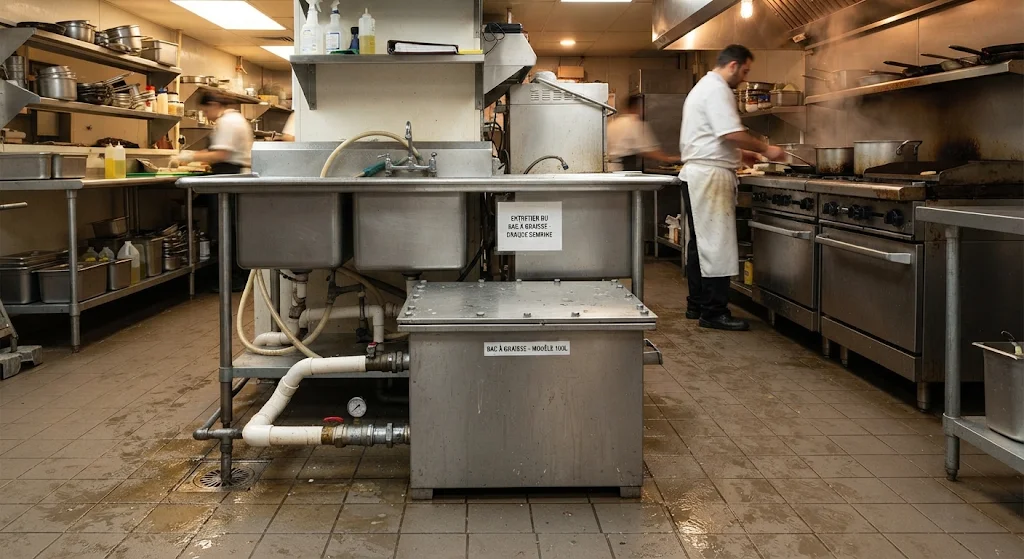
A grease trap can give plenty of warning before it disrupts a commercial kitchen. Slow drainage, Foul odors, and Gurgling pipes may point to Grease buildup that is restricting the flow of wastewater; Visible grease or an Overflowing trap signals a more urgent problem. These symptoms are easy to dismiss during a busy shift, but waiting can turn a maintenance issue into a Sewage backup, unsafe Standing water, or an interruption to service.
Signs Your Grease Trap Requires Prompt Pumping
Several symptoms suggest that the trap is full or no longer allowing wastewater to pass normally. A single sign may warrant an inspection; multiple signs, especially a backup or overflow, call for prompt professional attention.
- Slow drainage: Sinks or floor drains empty more slowly than usual, particularly when several fixtures are in use.
- Foul odors: Persistent rancid or sewer-like smells linger near drains or the trap despite routine surface cleaning.
- Gurgling pipes: Bubbling or unusual sounds accompany draining water, which can indicate restricted flow or trapped air.
- Frequent clogs: Repeated blockages return soon after basic clearing, suggesting the underlying grease accumulation remains.
- Visible grease: Grease appears in sinks, drains, or around the trap rather than remaining contained within the unit.
- Pest activity: Increased flies or other pests near drains may accompany food waste and poor sanitation, though pest activity alone does not confirm a trap problem.
When symptoms appear together, the pattern matters more than any one clue. A persistent odor combined with sluggish drains, for instance, deserves a closer look than a brief smell after food preparation.
Drainage Problems and Odors That Signal Grease Buildup
Slow drainage and Gurgling pipes can develop as grease and solids narrow the path through the trap or nearby plumbing. Staff may notice sinks taking longer to clear, standing water that remains after washing, or several fixtures draining poorly at once. These changes can affect sanitation and create slip hazards if water reaches the floor.
Foul odors often come from decomposing food waste and grease trapped in the system. If cleaning the sink and surrounding surfaces does not resolve the smell, the source may be inside the trap or connected pipework. Masking the odor does not address the blockage, so persistent smells should prompt an inspection and assessment for pumping.
Drainage symptoms can also come from other plumbing faults, so a qualified technician can determine whether pumping alone is appropriate or whether a downstream blockage needs attention.
Overflowing Trap and Sewage Backup: Urgent Conditions
An Overflowing trap, wastewater rising through a sink, or a Sewage backup requires immediate action. Stop using affected fixtures, keep staff away from contaminated water, and contact a licensed plumbing or grease-trap service provider. Do not try to wash grease back into the drain; that can spread the blockage and worsen the sanitation risk.
Visible grease outside the unit can make floors slippery, while wastewater may expose workers and food-preparation areas to contamination. Follow workplace procedures for restricting access and cleaning affected surfaces, and consult local health requirements before resuming normal use. Fast containment limits disruption, but the system must also be inspected to identify the cause.
Pumping Decisions and Maintenance Timing
Symptoms help determine urgency, but a routine inspection schedule can prevent many emergencies. Pumping frequency varies with kitchen volume, menu, equipment, trap capacity, and local rules; a schedule suitable for one establishment may not suit another. Some jurisdictions apply a 25-percent accumulation threshold for grease and solids, but operators should verify the rule that applies to their location rather than assume it is universal.
| Observed condition | Recommended response |
|---|---|
| Persistent slow drains or recurring clogs | Arrange prompt inspection and assess whether pumping is due. |
| Foul odors with no obvious surface source | Have the trap and connected plumbing checked. |
| Grease or wastewater overflowing | Stop using affected fixtures and request urgent professional service. |
| Routine service approaching its due date | Review maintenance records and local requirements; schedule preventive service. |
A maintenance log recording inspections, pumping, and recurring symptoms helps identify whether the service interval needs adjustment. It also provides useful documentation if local authorities request evidence of upkeep.
When warning signs appear, do not wait for a complete backup to confirm the problem. A qualified professional can inspect the trap, determine whether immediate pumping is needed, and recommend a maintenance plan suited to the kitchen and local regulations.