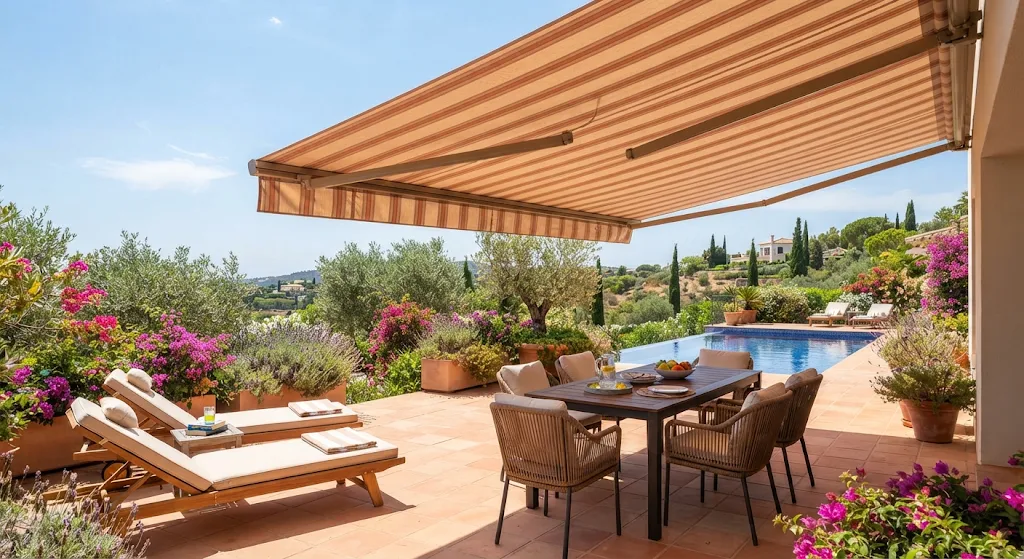
An outdoor canvas awning offers shade, shelter, and a distinctive finish, but constant exposure gradually tests its fabric and frame. Its service life depends not on one factor alone, but on canvas quality, installation, local weather conditions, and the care it receives. Understanding how these influences interact helps property owners spot preventable wear and make informed choices about upkeep or replacement.
Canvas Awning Lifespan and Material Quality
A well-made canvas awning commonly lasts about 8 to 12 years, although exposure and maintenance can move it toward either end of that range. The fabric, stitching, protective treatments, frame, and fittings all contribute to its overall fabric durability; a strong canopy can still fail early if its supports or fasteners are inadequate.
UV exposure gradually fades color and weakens fibers, while prolonged dampness can encourage mildew. Canvas is breathable and can help keep a sheltered area comfortable, but it is generally more vulnerable to moisture and sunlight than some synthetic fabrics. Water- and UV-resistant treatments can help, though they do not eliminate the need for care.
Weather Conditions and Awning Exposure
Local weather conditions shape how quickly an awning ages. Strong sunlight can dry and fade the material; repeated rain tests its rain resistance and may leave moisture trapped in folds. Wind damage can strain seams, arms, brackets, and the fabric itself, particularly when the canopy is left extended during gusts.
Usage matters, too. A retractable awning can be stowed when shade is not needed, reducing exposure to storms and harsh sun. It should not be treated as storm protection, however: follow the manufacturer’s operating guidance and retract it during high winds or severe weather.
| Factor | Effect on lifespan | Practical response |
|---|---|---|
| Intense sunlight | Fading and weakened fibers | Retract when possible and check fabric for brittleness |
| Rain and persistent damp | Mildew, staining, and material stress | Allow the canopy to dry fully before retracting |
| Strong winds | Strain on fabric, frame, and fixings | Retract the awning when conditions become gusty |
| Poor fitting | Uneven tension and added structural stress | Use qualified installation and inspect the supports |
Maintenance Practices That Preserve Canvas
Regular maintenance prevents dirt and organic debris from wearing against the weave. The right cleaning frequency depends on the surroundings: trees, dust, coastal air, and frequent rain may call for more frequent checks. Use a soft brush and a mild cleaning solution, following the fabric maker’s instructions; harsh chemicals or aggressive scrubbing can damage protective coatings.
After cleaning or rain, let the canvas dry completely before rolling it away. Inspect seams, stitching, brackets, and the frame for loose parts, corrosion, sagging, or small tears. Prompt repairs can stop minor defects from spreading, while periodic professional servicing can identify mechanical or installation issues that are easy to miss.
A consistent care routine can include these straightforward steps:
- Remove leaves and loose debris before they become embedded in the fabric.
- Check for mildew, fading, frayed seams, and signs of water pooling.
- Keep moving parts clean and lubricated as directed by the manufacturer.
- Retract the canopy in severe weather and avoid storing it while wet.
Installation Quality and Replacement Signs
Installation quality affects how evenly the canopy sits and how forces travel through its frame and fixings. Incorrect mounting, poor alignment, or uneven fabric tension can accelerate wear even when the material itself is sound. Professional installation helps ensure the awning is suited to the building and intended awning usage.
Replacement may be appropriate when tears keep returning, the fabric has become brittle, mildew cannot be removed, or the frame is bent or unstable. Persistent sagging and loose attachments also warrant prompt attention, since a compromised structure may no longer provide dependable shelter. A specialist can assess whether repair is practical or whether a replacement better suits the site.
Canvas awning longevity reflects the combined effects of material quality, exposure, fitting, and care—not a fixed timetable. Regular inspections, sensible weather precautions, and timely cleaning can help preserve its performance; consult an awning professional for tailored advice or specialist repairs.