Choosing between room-darkening shades and full blackout shades is not simply a matter of picking a darker fabric. The amount of light that enters around a shade, the way it is mounted, and the needs of each room all affect the result. Understanding these differences helps match window treatments to sleep, screen use, privacy, and daylight preferences.
Room-Darkening and Blackout Shades: How They Differ
Manufacturers do not all use “room-darkening” and “blackout” according to a shared industry definition, so labels alone can be misleading. Look for the stated light-transmission performance of the specific fabric, then consider how the shade will fit the window.
Room-Darkening Shades and Their Light Control
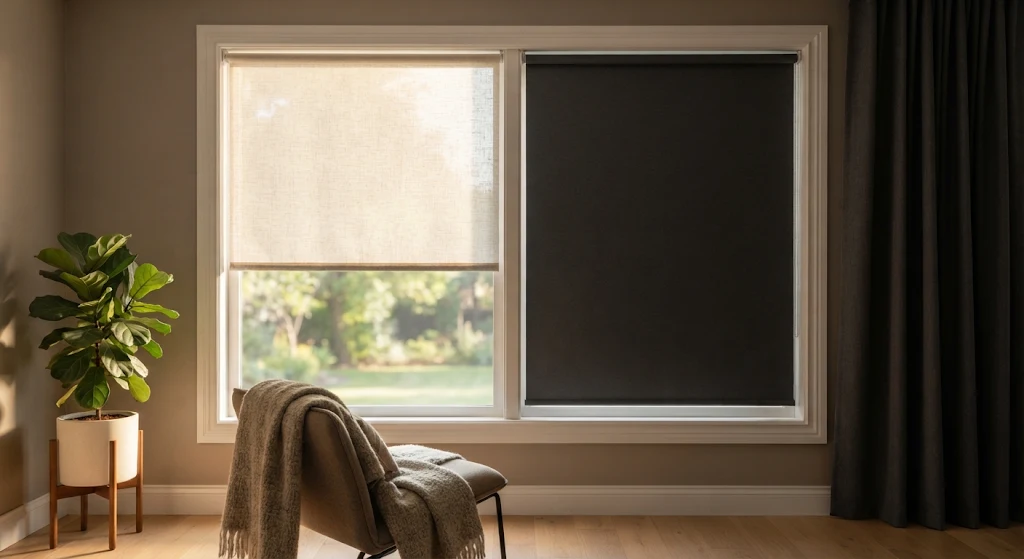
Room-darkening shades commonly block around 95–99% of light through the fabric, though performance varies by product. They make a room noticeably dimmer without creating total darkness, which can be useful when daylight is still welcome or when a soft morning glow is preferred.
Blackout Shades and Fabric Construction
Blackout shades are designed to block nearly all light passing through their fabric; some products report transmission below 0.1%. Multiple layers or dense woven shade materials can create this opacity. Check the individual product specification, since “blackout” is a marketing term rather than a guarantee of a completely dark room.
| Feature | Room-Darkening Shades | Blackout Shades |
|---|---|---|
| Light through fabric | Usually greatly reduced; a faint glow may remain | Near-total blockage when the fabric is properly specified |
| Typical use | Living rooms, offices, and many bedrooms | Nurseries, media rooms, and daytime sleeping |
| Installation sensitivity | Gaps may be acceptable where some daylight is desired | Gaps can undermine the goal of deep darkness |
Light Gaps and Installation: What Affects Darkness
Once fabric opacity is understood, the next question is how much light can bypass it. In many installations, light around the shade matters more than the small amount that passes through a high-performance blackout material.
Window Gaps Around the Shade
Inside-mounted shades sit within the window frame and need clearance to operate, leaving potential openings at the edges. Daylight can also enter above the headrail or beneath the bottom rail. As a result, a shade advertised as blackout may still leave visible light in the room.
Mounting Options for Better Coverage
Side channels can guide the fabric along the frame and reduce side leakage. Another option is an outside mount, with the shade extending beyond the window opening; a headrail or cassette can help cover the upper gap. For a stronger blackout effect, assess the whole window assembly rather than upgrading the fabric alone.
Before selecting a configuration, consider which practical steps fit the window and the room:
- Check the fabric’s stated light-transmission details instead of relying only on its category name.
- Measure the frame and identify gaps at the sides, top, and sill.
- Consider side channels or an outside mount when reducing edge leakage is a priority.
- Choose a shade colour and construction that suit the room’s appearance and daily use.
Installation choices also affect privacy: a well-fitted shade can limit views into a room, while a bright outline around its edges may still reveal that the covering is not fully sealed. The next consideration is how much darkness each room actually needs.
Room-by-Room Choices for Sleep and Daily Use
Different rooms call for different levels of light control. A single specification throughout a home may be convenient, but matching the shade to the room’s function can preserve useful daylight while limiting glare where needed.
Room-Darkening Shades for Flexible Spaces
Living rooms and home offices often benefit from room-darkening shades: they soften glare on televisions and monitors while keeping a sense of daylight. In many primary bedrooms, they provide sufficient dimming without eliminating the gradual morning light that some people prefer when waking.
Blackout Shades for Greater Darkness
Blackout shades are often a better fit for nurseries, bedrooms used for daytime sleep, and media rooms where stray light can disturb rest or reduce screen contrast. A light-sensitive sleeper may benefit from stronger coverage, but fabric alone cannot promise total darkness if the installation leaves open gaps.
Energy efficiency also depends on construction and fit. A shade can help limit solar heat and glare, but the blackout label by itself does not indicate how much insulation it provides; cellular construction and the overall window assembly can matter more. Likewise, dark fabric can reduce reflected interior light, while lighter shades may suit a brighter decorative scheme.
For a balanced choice, identify whether the priority is daylight, privacy, reduced glare, or dependable darkness, then compare fabric specifications and mounting methods. A window-treatment professional can assess measurements, shade materials, and installation options to provide advice tailored to the room.