A lawn’s appearance is shaped long before mowing patterns or garden borders come into view: the grass variety determines much of its color, texture, density, and seasonal behavior. Two lawns cared for in similar ways can look strikingly different because their grasses have different blade shapes, growth habits, and tolerances for sun, shade, heat, and dry conditions. The right match can make lawn aesthetics easier to maintain by aligning the grass with the site’s conditions.
Grass Variety and Lawn Appearance
Grass variety influences the overall character of a lawn through several visible traits. Leaf width, growth density, and the angle at which blades grow affect whether the surface looks delicate, bold, uniform, or somewhat coarse.
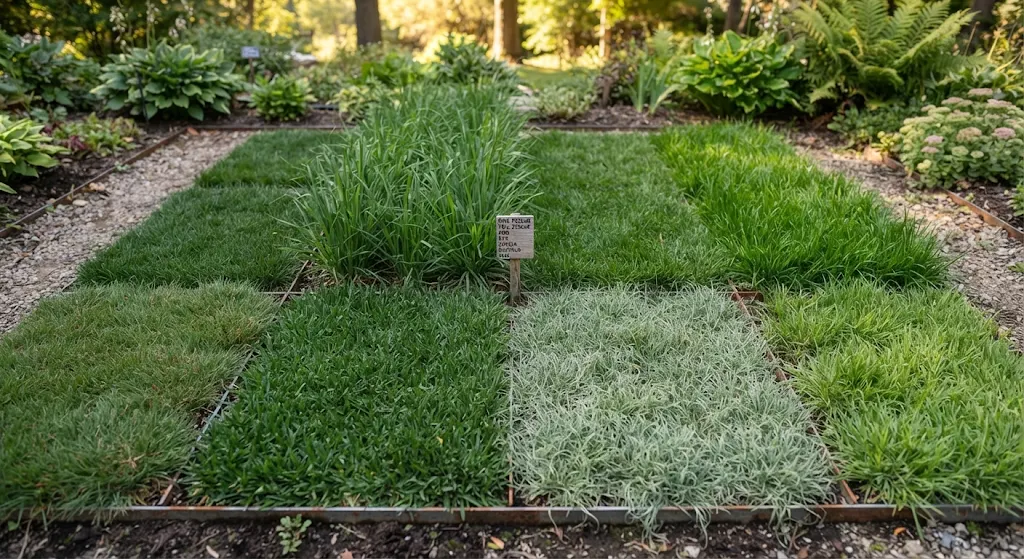
These differences are easy to notice when varieties are planted side by side. Fine fescues, for instance, generally have narrow leaves that create a refined look, while tall fescues tend to have wider blades and a more substantial appearance. Neither look is inherently better; the best choice depends on the desired effect and the demands of the site.
Color, Texture, and Blade Shape
Several connected features define how grass looks at close range and across a whole garden. Color attracts attention first, but texture and leaf form determine whether that color reads as smooth, soft, rugged, or varied.
Color and Seasonal Change
Grass color varies by species and cultivar, ranging from light yellow-green to deep blue-green. Soil fertility, moisture, sunlight, and temperature also affect the shade, so a cultivar’s typical color is only one part of the picture.
Seasonal color matters when choosing a lawn for year-round appearance. Cool-season grasses often remain greener during mild, cool weather but may lose color during hot, dry periods; warm-season grasses usually flourish in summer and can become dormant or straw-colored after temperatures fall. Local climate determines how pronounced these shifts will be.
Texture and Leaf Form
Turf texture describes the visual and tactile impression created by the leaves. The blade shape—including width, tip, and stiffness—helps produce that impression: narrow, fine leaves tend to look smooth, while broader or firmer blades create a coarser surface.
Growth pattern also plays a role. Upright blades can give a lawn a crisp, structured look, whereas varieties that spread readily may form a more continuous carpet. The combination of leaf form and density sets the visual rhythm of the turf.
Growth Density and Lawn Uniformity
Growth density describes how closely grass plants fill the ground. A dense lawn often appears smooth and consistent, while a more open stand can reveal soil or allow weeds to become more noticeable.
Density depends on the variety’s growth habit as well as growing conditions and maintenance. Some grasses spread through runners or underground stems, helping them recover from wear and fill gaps; bunch-forming varieties grow in clumps and may need more careful establishment to achieve an even finish. Mowing at an appropriate height supports a healthier, more uniform surface.
For a quick comparison, the following traits show how common grass groups can influence appearance. Individual cultivars differ, and climate can change the results.
| Grass Group | Typical Visual Character | Notable Adaptation |
|---|---|---|
| Fine Fescue | Narrow blades and a fine texture | Often suited to partial shade |
| Tall Fescue | Broader leaves and a robust look | Good drought tolerance in many cultivars |
| Perennial Ryegrass | Fine-to-medium texture and a rich green color | Quick establishment under suitable conditions |
| Bermudagrass | Dense, fine-textured growth in warm weather | Strong heat performance and sun preference |
Site Conditions and Grass Selection
A variety’s appearance can only be judged fairly when its growing conditions are considered. A grass that thrives in full sun may thin beneath trees, while a shade-adapted choice can look pale or sparse in intense heat.
Sunlight and Shade Tolerance
Shade tolerance affects how well grass maintains coverage where daylight is limited. Fine fescues are often considered for partially shaded areas, but even shade-tolerant grasses need some light and may struggle under dense tree canopies or heavy foot traffic.
Sun exposure also influences color and density. Matching the variety to the amount of light available helps preserve a more consistent appearance instead of relying on extra watering or fertilizer to compensate for a poor fit.
Water Needs and Drought Tolerance
Drought tolerance affects how well a lawn retains its coverage and color during dry spells. Deep-rooted types may endure periods of limited rainfall better than shallow-rooted grasses, though all varieties need suitable establishment and soil conditions.
When comparing options, consider these appearance-related questions alongside the climate and intended use:
- Does the preferred color remain attractive during the local growing season?
- Will the blade shape and turf texture suit the desired garden style?
- Can the variety tolerate the site’s typical sun, shade, and water availability?
These checks, carried out with the help of a lawn care expert, help align visual expectations with what the site can support, making long-term lawn care more predictable.