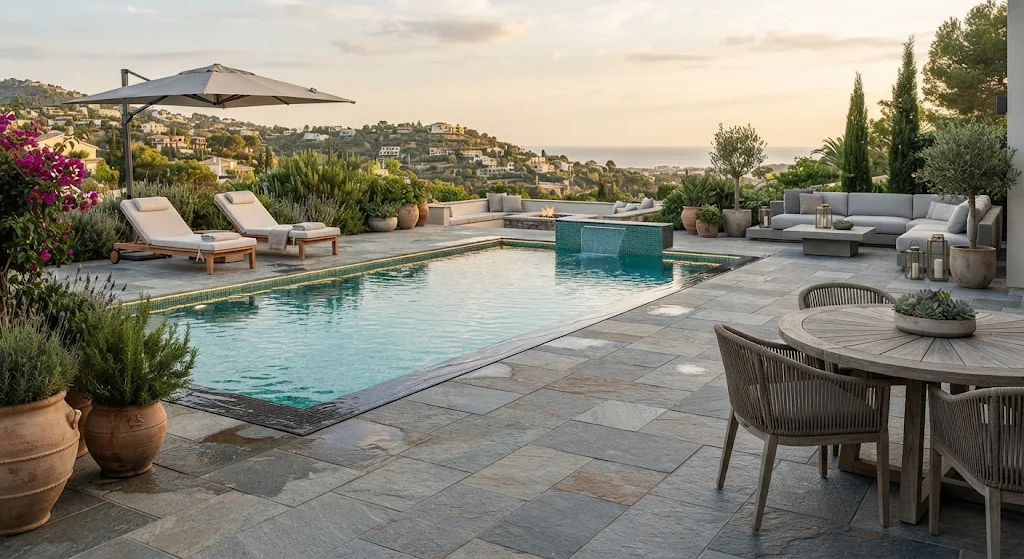
A poolside patio must do more than frame the water: it needs to stay comfortable underfoot, provide reliable traction when wet, and withstand years of sun, splashes, and foot traffic. Choosing stone pavers means balancing appearance with performance, since a finish that looks elegant in a sample may feel slippery or become hot in full sun. Material, surface texture, drainage, and installation all shape how safe and inviting the finished pool deck will be.
Material Choices for Poolside Patio Stone Pavers
Start with the conditions around the pool rather than color alone. Water absorption, weather exposure, and resistance to pool chemicals affect how paving performs over time; local freeze-thaw cycles also matter where winters are cold.
Natural stone offers individual color and veining, but varieties differ in density and care requirements. Travertine and limestone can create a soft, warm appearance, while granite is generally dense and well suited to demanding outdoor use. Porcelain pavers provide more uniform patterns and low water absorption, although their appearance is less naturally varied.
Material Performance and Paver Durability
Compare technical specifications for exterior use, not just indoor samples. Ask suppliers about suitable climates, sealing recommendations, and resistance to chlorine or salt exposure; paver durability depends on the stone, its finish, and the quality of the base beneath it.
Surface Features for Slip Resistance and Heat Resistance
A wet pool surround calls for a finish that provides dependable slip resistance. Smooth, polished surfaces can become hazardous when splashed, so compare textured, brushed, or honed finishes and confirm that the selected product is rated for exterior wet areas.
Surface texture also changes the look and feel of the patio. A rougher stone may improve grip but can be less comfortable on bare feet or harder to clean, while a subtle texture can balance traction with easy upkeep. Request samples and assess them wet as well as dry.
Texture and Temperature Underfoot
Heat resistance is another practical consideration in sunny locations. Lighter colors often absorb less solar heat than darker ones, but the material, finish, shade, and orientation all influence surface temperature; no stone should be assumed cool without checking its performance in comparable conditions.
Layout Planning for Pool Deck Design
Good pool deck design links the water, seating areas, and garden paths into a clear, comfortable route. Larger pavers can make open spaces feel calm, while smaller units help accommodate curves and edges; consistent joints make the overall pattern easier to follow.
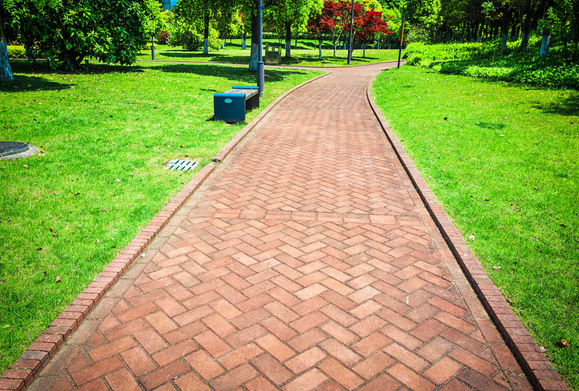
Stepping stones can define a path across lawn or connect the patio to a garden. Rubber versions are lightweight and often have textured surfaces, while river-rock mats provide a more organic look but may need repositioning if the backing shifts. Use these as paths, not as a substitute for a stable, continuous walking surface beside the pool.
Before choosing a pattern, consider these practical criteria:
- Traction: Select an exterior finish intended for wet foot traffic.
- Climate: Check frost suitability and expected heat exposure.
- Appearance: Coordinate color and stone texture with coping, fencing, and planting.
- Care: Confirm whether sealing or specialized cleaning is recommended.
These choices narrow the material options; the next step is matching them to the site and how the patio will be installed.
Installation Details for a Stable Patio
Successful patio installation begins below the visible surface. A properly prepared, compacted base and suitable drainage help prevent movement, standing water, and uneven joints. The exact build-up depends on soil, climate, paver type, and whether the project uses a flexible or mortar-set system.
Joints, Drainage, and Edge Restraint
Jointing material should suit the pavers and the exposure to water; products designed for outdoor joints can help limit washout and weed growth when installed as directed. Keep water moving away from the pool structure and avoid directing runoff toward the house. Stable edge restraints help keep the paving aligned, particularly along curves and walkways.
For a small path, individual stepping stones can be laid on level ground with even spacing, but check that each sits firmly and does not rock. Around the main pool deck, professional planning helps coordinate coping, drainage, and expansion details.
Maintenance Practices for Lasting Stone Pavers
Routine sweeping removes grit that can wear finishes, while prompt rinsing clears pool splashes and organic debris. Use cleaning products compatible with the chosen stone; abrasive tools or unsuitable chemicals can damage a surface or its seal. Rubber stepping stones generally need occasional brushing with mild soapy water, while pebble mats benefit from checks after storms or heavy mowing.
| Surface Type | Poolside Strength | Planning Point |
|---|---|---|
| Natural stone | Distinctive color and texture | Check absorption, sealing, and climate suitability |
| Porcelain pavers | Consistent finish and low absorption | Choose an exterior wet-area surface |
| Rubber stepping stones | Lightweight and easy to reposition | Reserve for paths and confirm secure placement |
Inspect joints, edges, and walking routes regularly, especially after severe weather. A well-chosen surface paired with sound installation and appropriate care makes the poolside patio safer, more cohesive, and better suited to years of outdoor use.