
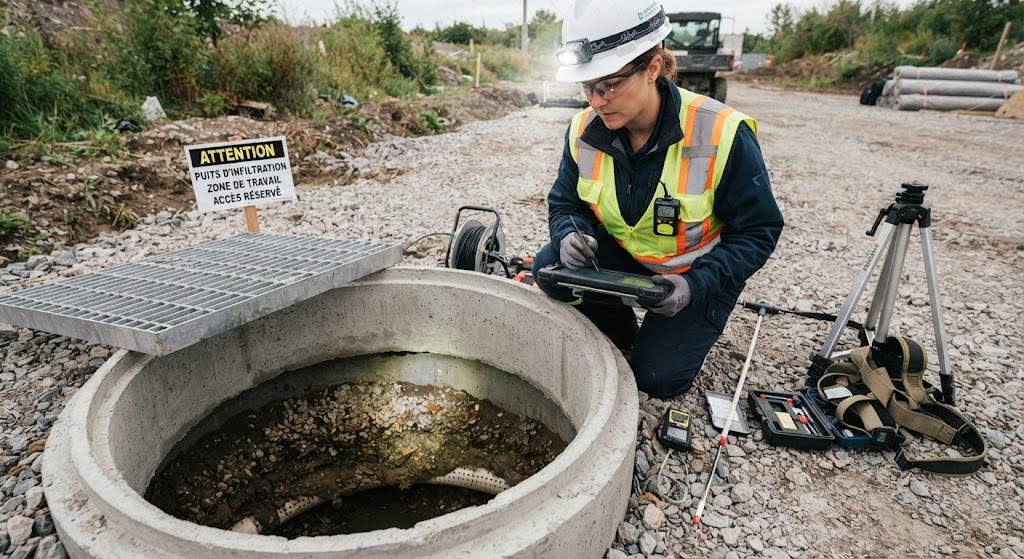
A drywell can continue managing runoff for years when its inlet, storage space, and surrounding soil remain in good condition. When it no longer functions safely—or the site no longer needs it—owners face a different decision: whether to restore the system through routine care or pursue permanent closure. Understanding the distinction helps protect property, groundwater, and regulatory compliance.
Maintenance That Restores Drywell Performance
Maintenance addresses buildup, blockages, and deterioration while keeping the drywell operational. The aim is to preserve infiltration, not simply to make the surface look clear; persistent ponding or slow drainage may signal problems below ground.
Regular inspection can identify debris on the grate, sediment accumulation, damaged access points, or signs that water is no longer soaking into the surrounding soil. Guidance varies by jurisdiction, but some stormwater programs recommend clearing grates at least twice a year, and more often when debris collects quickly.
Inspection and Sediment Removal
Begin with a visual inspection of the inlet and nearby ground, noting standing water, erosion, unusual odors, or settlement. Remove leaves and sediment from the grate, but do not enter the structure: confined spaces can pose serious hazards and require trained personnel and proper equipment.
If cleaning does not restore drainage performance, a qualified stormwater professional can assess the interior, connecting pipes, and soil conditions. Repeated clogging may reflect fine particles entering the system, inadequate pretreatment, or a more substantial structural or infiltration problem.
Structural Integrity and Routine Care
Cracks, shifting, corrosion, or a damaged cover can compromise structural integrity and create safety risks. Repairs should follow local requirements, since a drywell may be regulated as a stormwater drainage structure or, in some areas, under underground injection control rules.
Keep maintenance records, including inspection dates, observed issues, and work completed. A documented history helps distinguish a temporary blockage from a recurring failure and supports informed decisions about repair or closure.
Closure That Permanently Retires a Drywell
Permanent closure is appropriate when a system is no longer needed, cannot be repaired reliably, or presents a risk that continued operation would not resolve. Unlike maintenance, closure ends the drywell’s role in managing runoff and must account for where that water will go instead.
Before work begins, confirm local permitting and technical requirements. Rules differ by location and site conditions; some guidance, for example, sets minimum separation from seasonal high groundwater or impermeable layers, while other jurisdictions apply different criteria. Existing design standards should not be mistaken for universal closure instructions.
Decommissioning and Backfilling
Decommissioning generally involves assessing the structure, managing any remaining water or sediment, and following an approved method to disable or remove it. Backfilling must use suitable material and procedures to avoid leaving a void, causing settlement, or directing runoff toward foundations or neighboring land.
Because a closed drywell no longer infiltrates runoff, a replacement drainage plan may be necessary. Directing water to another approved infiltration feature, a municipal system, or a properly designed surface route depends on site conditions and local authorization.
Groundwater Protection and Compliance
A drywell conveys runoff into the soil, so closure work should prevent contaminants or accumulated sediment from spreading. The appropriate method depends on what the system received, its construction, and applicable environmental rules; professional assessment helps determine whether special handling is needed.
Before choosing between continued care and retirement, weigh the following factors together:
- Observed condition: recurring ponding, blockage, settlement, or damage may require specialist assessment.
- Repair prospects: effective cleaning or repair can extend service, but persistent failure may favor closure.
- Drainage alternatives: identify a compliant route for runoff before disabling the existing system.
- Local obligations: verify permits, closure procedures, and documentation with the relevant authority.
Decision Factors for Maintenance or Closure
Maintenance is a continuing effort to keep a sound system working; permanent closure is a regulated change to the site’s drainage infrastructure. The comparison below summarizes the practical distinction, but local requirements and a site-specific evaluation should guide the final decision.
| Consideration | Maintenance | Permanent Closure |
|---|---|---|
| Purpose | Restore or preserve operation | Retire the structure permanently |
| Typical work | Inspection, grate cleaning, sediment removal, and repairs | Approved decommissioning and backfilling or removal |
| Runoff management | Continues through the drywell | Requires an alternative drainage approach |
| Key considerations | Infiltration, access, and structural integrity | Permits, groundwater protection, and regulatory compliance |
When the structure remains sound and infiltration can be restored, maintenance may be the appropriate path. If failure persists or the site’s needs have changed, consult a professional and the local authority to determine a safe, compliant closure plan.