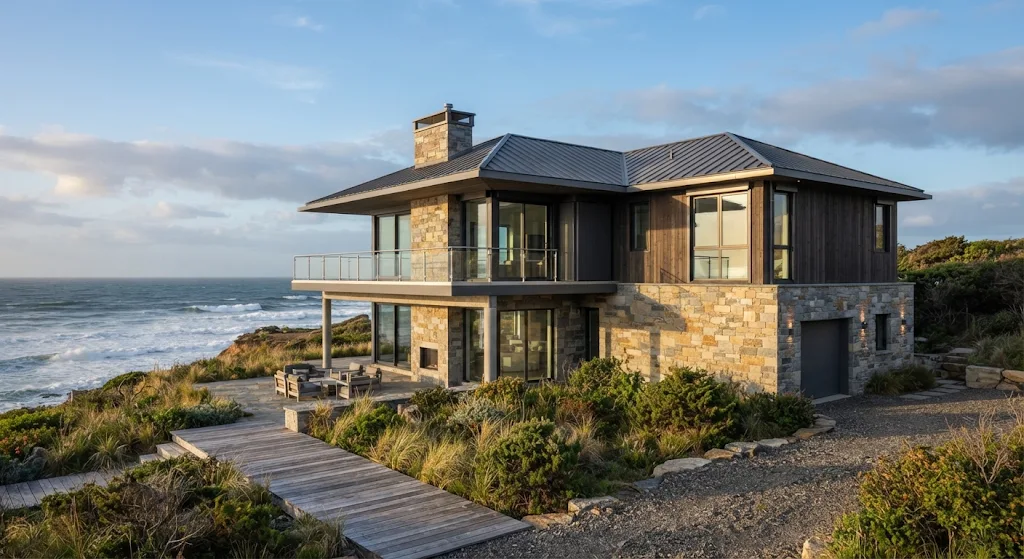
🌊 Coastal homes offer beautiful surroundings, but their exterior surfaces face demanding environmental conditions. Salt carried by sea air, strong winds, humidity, intense sunlight and occasional storms can gradually damage building materials. Choosing suitable finishes and construction products is therefore essential to maintaining a property’s appearance, structural protection and long-term performance.
Understanding Coastal Weather Conditions
Living near the sea exposes exterior surfaces to several environmental factors that may accelerate deterioration.
Salt Air and Humidity
Salt particles carried by coastal winds can settle on walls, windows, metal fixtures and roofing components. Over time, they may contribute to corrosion, staining and surface damage, particularly when materials are not designed for marine conditions.
High humidity can also encourage mould growth, paint deterioration and moisture-related problems. Exterior finishes should therefore provide suitable protection while allowing building components to perform as intended.
Wind, Sunlight and Heavy Rain
Coastal properties may experience stronger wind exposure than homes located further inland. Wind-driven rain can penetrate vulnerable joints, while intense sunlight may cause certain paints, plastics and sealants to fade, crack or lose their original properties.
Material selection should account for the combined effects of these conditions rather than focusing on a single environmental factor.
Durable Materials for Coastal Home Exteriors
🏡 Different materials offer specific advantages depending on the part of the property they protect. Comparing their characteristics helps identify suitable options for walls, roofing, windows and outdoor structures.
Fibre Cement Siding
Fibre cement siding is made from a combination of cement, cellulose fibres and other components. It is valued for its resistance to moisture-related deterioration, insects and fire, although its performance depends on correct installation and maintenance.
Available in different textures and finishes, it can reproduce the appearance of traditional timber while offering a different maintenance profile. For coastal properties, homeowners should select products approved for their exposure conditions and ensure that edges, joints and fixings are properly protected.
Natural Stone and Brick
Natural stone and brick can provide durable exterior surfaces with a distinctive architectural appearance. Both materials are used in coastal construction, but their suitability depends on their composition, porosity and exposure to salt and moisture.
Some stones can absorb water and become vulnerable to deterioration when exposed to repeated wetting and drying. Brickwork also requires suitable mortar and correctly designed drainage details.
Choosing materials appropriate for the local marine environment is essential to preserving their appearance over time.
Aluminium and Stainless Steel
Metal components are commonly used for window frames, railings, gutters and exterior fixtures. However, salt exposure can accelerate corrosion in unsuitable metals or poorly protected finishes.
Marine-grade stainless steel and appropriately coated aluminium can offer better resistance to coastal conditions. The selected grade, protective treatment and compatibility between connected materials should all be considered.
Roofing Materials
Roofing systems must withstand sunlight, wind, rain and airborne salt. Metal roofing with suitable protective coatings, concrete tiles and certain clay tiles can be considered depending on the building design and local climate.
Important factors include:
-
Corrosion resistance: Metal roofing should have coatings suited to marine exposure.
-
Wind performance: Roofing systems must be properly secured for local wind conditions.
-
Moisture protection: Underlayments, flashing and roof joints should prevent water infiltration.
-
Maintenance access: Roof designs should allow inspections and cleaning when necessary.
Comparing Exterior Materials for Coastal Properties
The following table summarises some common options and their main considerations.
| Material | Main Advantages | Points to Consider |
|---|---|---|
| Fibre cement | Moisture and insect resistance | Correct sealing and installation |
| Natural stone | Distinctive appearance and durability | Porosity and salt exposure |
| Brick | Long-lasting and versatile | Mortar quality and moisture management |
| Aluminium | Lightweight and corrosion-resistant when properly treated | Protective coating and hardware quality |
| Stainless steel | Good corrosion resistance in suitable grades | Marine-grade specification and maintenance |
| Coated metal roofing | Lightweight and available in different finishes | Coating quality and wind resistance |
Maintaining Coastal Exterior Surfaces
🔧 Even durable materials require regular inspection in marine environments. Salt deposits, accumulated dirt and minor damage can gradually affect exterior finishes if they are ignored.
Homeowners can support the longevity of their properties by following a few practical measures:
-
Rinse exposed surfaces: Remove accumulated salt from suitable exterior materials using appropriate cleaning methods.
-
Inspect metal components: Check railings, fasteners, gutters and window frames for early signs of corrosion.
-
Maintain protective coatings: Repair damaged paint and finishes according to manufacturer recommendations.
-
Check joints and sealants: Look for cracks or gaps around windows, doors and exterior connections.
-
Monitor drainage: Keep gutters and downpipes clear to prevent water accumulation and unwanted moisture.
Professional inspections can also help identify problems that are difficult to detect during routine maintenance.
Building a Coastal Home That Lasts
🌿 Choosing durable materials for coastal home exteriors requires careful consideration of salt exposure, humidity, wind and sunlight. Fibre cement, suitable stone and brick, corrosion-resistant metals and properly specified roofing systems can all contribute to a more resilient property.
The most appropriate solution depends on the home’s location, architectural design and maintenance expectations. Consulting a construction professional or exterior specialist can help homeowners select materials that meet local conditions and provide lasting protection while preserving the property’s appearance.