Roof flashing is a critical component of a weatherproof roofing system. Installed around chimneys, skylights, vents, valleys and wall junctions, it directs water away from vulnerable connections. When flashing deteriorates or becomes incorrectly positioned, rainwater can enter the roof cavity and cause damage that may remain hidden for some time.
1. Common Causes of Roof Flashing Failure
Flashing is exposed to rainfall, sunlight, temperature fluctuations and movement between adjoining building materials. Over time, these conditions can weaken its ability to prevent water ingress.
Material deterioration is one of the most common concerns, particularly when flashing corrodes, cracks or separates from adjacent surfaces.
Other causes include:
- Poor installation: Incorrect overlaps or inadequate detailing can leave gaps where water enters.
- Thermal movement: Expansion and contraction may place stress on joints and seals.
- Storm damage: Strong winds or falling debris can dislodge exposed flashing.
- Ageing sealants: Sealants can deteriorate and lose their effectiveness.
- Incompatible materials: Certain metal combinations can accelerate corrosion.
A professional inspection helps establish which factor has caused the failure and whether nearby roofing components are also affected.
2. Warning Signs of Damaged Flashing
Flashing problems often become noticeable after rainfall, although the actual defect may be difficult to identify from inside the home.
Interior and Exterior Indicators
Water staining around ceilings, chimneys or skylights may indicate a flashing defect. Peeling paint, damp plaster and mould can also suggest recurring moisture exposure.
From a safe position, homeowners may notice visibly lifted metal edges, corrosion or gaps around roof junctions.
However, these symptoms are not exclusive to flashing failure. A roofing specialist must distinguish between defective flashing, damaged roof coverings, condensation and other possible causes.
3. How Professionals Repair Roof Flashing
The appropriate repair depends on the flashing material, roof design and extent of deterioration.
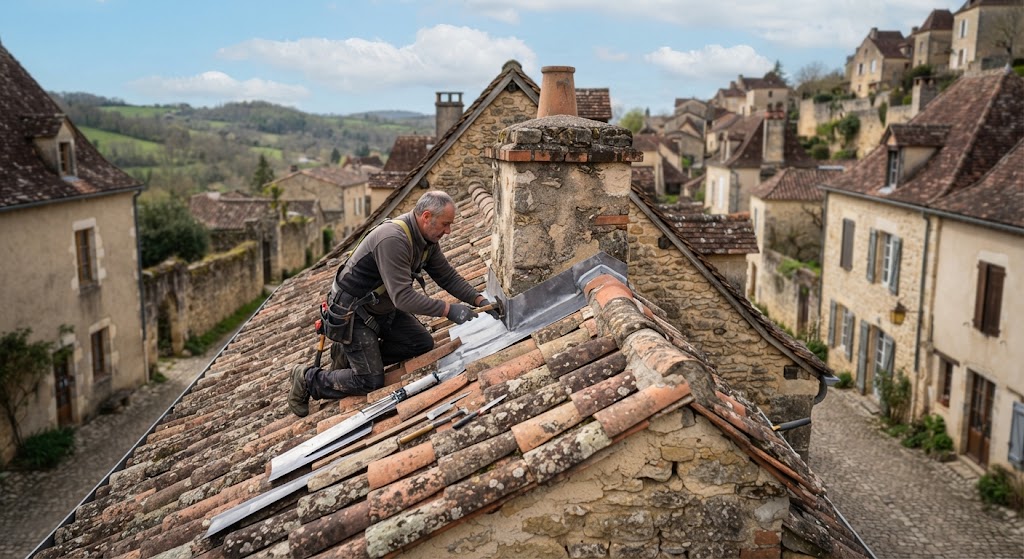
A qualified roofer typically begins by examining the affected junction and tracing the path of water entry. The inspection may also cover adjacent tiles or metal sheets, underlay and supporting materials.
Localised repairs may be suitable when the flashing remains sound but has a limited defect. More extensive deterioration may require replacement.
Professional work can involve:
- Removing damaged flashing where necessary.
- Installing correctly sized replacement components.
- Restoring suitable overlaps and connections.
- Using compatible sealants where the roofing system requires them.
- Checking adjacent materials for secondary damage.
Simply applying sealant over a failed junction may not provide a durable solution if the underlying installation is defective.
4. Why Flashing Material and Installation Matter
Different roofing systems require flashing details suited to their materials and construction. Tile roofs, metal roofs and masonry junctions may each need different installation methods.
Material compatibility helps reduce corrosion risks and supports long-term performance. Correct detailing is equally important because even durable flashing can fail if water is directed towards an unprotected joint.
A professional roofer can select suitable components and ensure the repair integrates with the existing roofing system.
5. Preventing Future Flashing Problems
Routine roof inspections help identify corrosion, loose edges and deteriorating seals before water enters the building.
The need for maintenance depends on the roof’s age, exposure to severe weather and the condition of surrounding materials. Properties near the coast may require particular attention to corrosion.
Roof flashing may be small compared with the main roof covering, but its role in weatherproofing is substantial. Prompt professional repairs help protect vulnerable junctions, reduce recurring leaks and preserve the roof’s overall performance.