
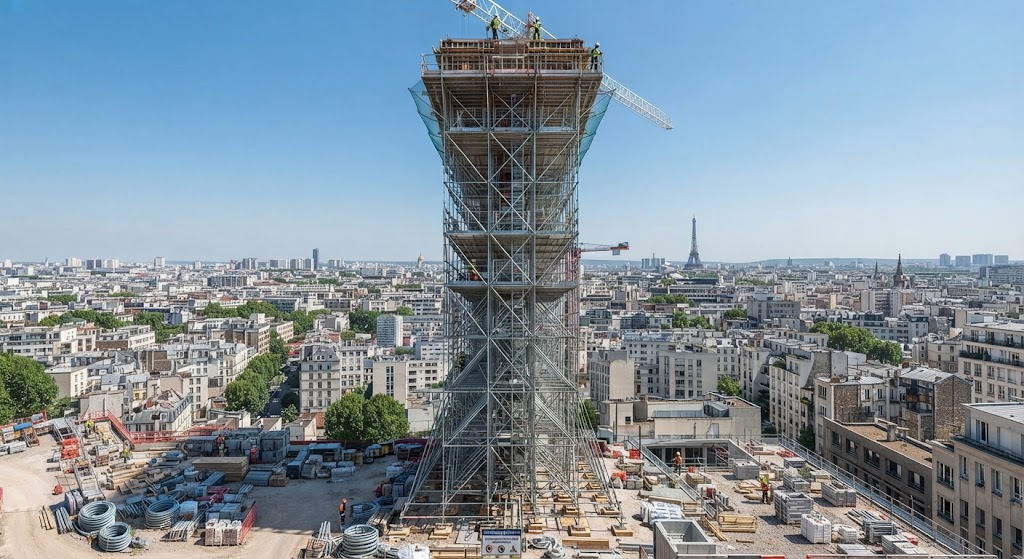
Scaffold tower height is not set by one universal number. It depends on the tower’s design, base width, ground conditions, applied loads, weather exposure and the measures used to prevent overturning or collapse. The familiar 4:1 rule is a useful starting point, not a complete design specification: a tower may need ties or other restraint before reaching that ratio, while a properly engineered system can extend higher. Understanding how these factors interact helps determine the maximum safe height and the controls required for each site.
Scaffold Tower Height and the 4:1 Rule
For supported scaffolds, Australian work health and safety requirements generally require scaffolds to be erected and used in accordance with applicable regulations, relevant Australian Standards, and the manufacturer’s instructions. Stability depends on factors such as scaffold height, base dimensions, ground conditions, ties, and bracing. Specific requirements vary by scaffold type and jurisdiction, so the applicable state or territory regulations should be checked rather than relying on a single universal height ratio.
Mobile towers have additional requirements, and local rules, manufacturer instructions, and scaffold type can change what is permitted. A free-standing tower may need to be tied to a structure, braced, or fitted with outrigger supports as it rises. These measures must be selected for the specific system rather than improvised on site.
Height-to-Base Ratio and Restraint
The 4:1 ratio is a trigger for restraint, not a substitute for a stability assessment. The tower’s narrowest base dimension matters, and the planned platform height, configuration, and support conditions must all be checked against the applicable requirements.
Where ties are required, they must connect to a suitable structural member and follow the system’s design or a qualified engineer’s specifications. Weak anchors or incorrectly spaced restraints can transfer risk rather than remove it.
Stability Factors That Limit Safe Height
As scaffold tower height increases, forces at the base and connections rise, and small defects can have larger consequences. A safe design therefore considers the complete load path, from the working platform through frames and braces to the supporting ground.
Several site conditions can reduce the height that is safe for a particular setup:
- Foundation: Soft, sloping, or uneven ground can cause settlement or uneven loading; suitable sole plates and adjustable base jacks help distribute loads and level the structure.
- Structural load capacity: The scaffold must support workers, tools, materials, and equipment within its rated limits, with loads distributed as specified.
- Wind exposure: Gusts exert greater force at elevation, while sheeting, netting, or enclosed platforms can act like a sail and require additional engineered restraint.
- Platform rigidity: Bracing, secure connections, and correctly installed platforms reduce sway and help maintain scaffold stability.
Rain, snow, ice, and nearby site activity can also change conditions. A height suitable in one location or configuration may be unsafe after the ground softens or a weather enclosure is added.
Design Requirements for Greater Heights
There is no single maximum safe height for every scaffold tower. The manufacturer’s instructions, applicable safety regulations, scaffold type, tie-in requirements, and project-specific engineering determine the limit.
Rules also vary by jurisdiction and equipment. A figure intended for a particular H-frame configuration or mobile tower should not be applied automatically to another system. When the arrangement departs from the manufacturer’s instructions, or involves unusual loads, extensive sheeting, or complex geometry, obtain a site-specific design from a qualified professional.
| Design consideration | Why it matters | Control |
|---|---|---|
| Free-standing height | Excessive height relative to base can increase overturning risk. | Check the applicable ratio and install designed restraint when required. |
| Loads and configuration | Added materials, platforms, or enclosures affect forces on the structure. | Follow rated capacities and approved drawings. |
| Ground and weather | Settlement and wind can undermine stability. | Verify foundations and reassess after significant changes or severe weather. |
Inspection and Access Controls at Height
Sound design must be matched by careful erection and ongoing checks. A competent person should inspect the scaffold before use, after alterations, and after events that could affect its integrity, including severe weather. Damaged components, missing braces, loose ties, or settling bases require correction before work resumes.
Workers also need safe access and fall protection. Install guardrails and other required protections, secure platforms, and keep access routes clear. The correct arrangement depends on scaffold type and local rules; training should cover assembly, dismantling, loading, and hazard recognition.
Before setting a target height, verify the equipment documentation, ground capacity, expected loads, wind exposure, and restraint design together. A qualified scaffold professional can assess the specific configuration and recommend controls suited to the site.