When excavation exposes groundwater, the immediate concern is not simply removing water: the flow can affect soil stability, worker safety, nearby structures, and the construction schedule. The right response depends on how much water is entering, where it is coming from, and how the ground behaves once saturated. With prompt assessment and appropriate groundwater control, an unexpected discovery can often be managed without bringing a project to a halt.
Groundwater Intrusion Changes Excavation Conditions
Groundwater intrusion may appear as seepage through the sides or base of an excavation, pooling water, or a sudden inflow. It can indicate an unexpected water table, seasonal variation, recent rainfall, or a local groundwater pathway that was not apparent during initial investigations.
Water can soften some soils, wash away fine particles, and reduce the stability of excavation faces. These excavation hazards may also affect foundations and nearby infrastructure if the ground shifts or water removal changes surrounding soil conditions. The first priority is to pause work in the affected area and have qualified site personnel assess the conditions.
Groundwater Risks to Excavation Safety
Standing water creates slippery surfaces and can conceal uneven ground, while a sustained inflow may undermine the excavation base. If water carries soil particles with it, the resulting ground loss can contribute to instability beyond the immediate work area.
Workers should follow the site’s excavation safety procedures, including any required inspection, access restrictions, and protective systems. Pumping should not begin as an improvised fix: rapid or poorly planned drawdown can affect soil and neighbouring structures.
Groundwater Effects on Schedule and Site Conditions
Persistent inflows can interrupt excavation, delay foundation work, and require additional monitoring or equipment. The scale of the effect depends on flow volume, soil permeability, excavation depth, weather, and the time needed to obtain any necessary discharge approvals.
These are manageable risks, not automatic reasons to abandon a project. Early communication between the contractor, geotechnical professionals, and project team helps determine the safest next steps.
Assessment Determines the Groundwater Response
Before selecting a control method, teams need to understand both the source of the water and the ground conditions. A hydrogeological assessment, combined with geotechnical information, can help establish groundwater levels, likely inflow paths, soil characteristics, and possible effects on the surrounding area.
Existing soil reports and local knowledge can provide useful clues, but actual conditions may vary across a site or change over time. The findings should inform a site-specific plan rather than a one-size-fits-all pumping decision.
Groundwater Controls Matched to Site Conditions
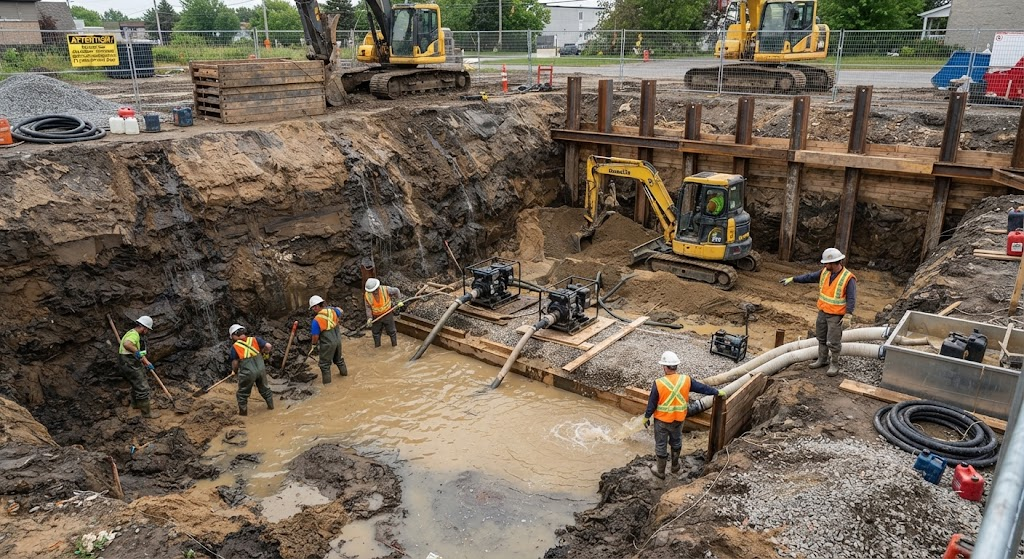
Depending on the assessment, a contractor may use dewatering systems to lower water levels, or trenches and channels to direct water away from the work area. Barriers may also be considered where limiting groundwater entry is more suitable than removing water continuously.
Method selection should account for discharge requirements and the possibility that pumping could draw fine soil from beneath or around the excavation. A system that keeps the work area dry but destabilizes nearby ground is not an effective solution.
Groundwater Monitoring During Excavation
Water levels, pump performance, weather, and the excavation’s condition should be checked regularly. Monitoring can reveal whether inflow is increasing, drainage is failing, or soil movement requires work to stop and the plan to be reviewed.
Useful checks typically include:
- Recording groundwater levels and changes in inflow.
- Inspecting pumps, hoses, trenches, and drainage outlets.
- Watching for muddy discharge, erosion, or ground movement.
- Checking forecasts and adjusting site drainage for heavy rain.
Consistent records help the team respond to changing conditions before they develop into larger disruptions.
Planning Reduces Groundwater-Related Delays
When site information suggests groundwater is likely, its management should be addressed during planning and contractor discussions. Allowing for suitable investigation, equipment, monitoring, and discharge procedures can reduce the chance that water becomes an unmanaged surprise once excavation is underway.
Unexpected conditions can still occur, so the project team should document what was found, when it appeared, and how it was handled. Contract provisions and reporting requirements vary by jurisdiction and agreement; project participants should review the relevant documents with appropriate advisers.
Groundwater Discharge and Environmental Duties
Pumped water cannot always be released wherever convenient. Local rules may require authorization, treatment, or testing before discharge, especially if sediment or contaminants could affect public drains or natural waterways.
Planning the outlet and checking applicable requirements help avoid environmental harm and prevent avoidable interruptions. Groundwater control is most reliable when safety, soil behaviour, and water disposal are considered together.
Groundwater Decisions With Professional Support
If groundwater appears, notify the responsible site supervisor and consult qualified geotechnical or groundwater professionals before changing pumping rates or resuming affected work. Their assessment can distinguish ordinary seepage from conditions that threaten excavation stability or nearby assets.
Thoughtful investigation, suitable dewatering systems, and ongoing monitoring can limit construction delays while protecting people and surrounding ground. A site-specific professional assessment is the soundest basis for deciding what to do next.